Design System
Design System
Design System
150+ Hours Saved in Development by Leveraging the Design System
150+ Hours Saved in Development by Leveraging the Design System
150+ Hours Saved in Development by Leveraging the Design System
Medprime Design System is a centralised design resource built to help developers and designers create consistent, intuitive interfaces across all of Medprime’s web and mobile applications.
Medical Diagnostics
Medical Diagnostics
Medical Diagnostics
UI/UX Design
UI/UX Design
UI/UX Design
Healthcare Professionals
Healthcare Professionals
Healthcare Professionals
Live Project
Live Project
Live Project
PROBLEMS
PROBLEMS
Medprime’s digital products suffered from inconsistent UI patterns, with buttons, forms, spacing, and colours varying widely across platforms. This lack of standardisation led to redundant efforts across teams, slowing down development cycles and causing friction in collaboration. Without a shared design language or clear guidelines, alignment between designers and developers was often difficult, resulting in implementation gaps and rework.
Medprime’s digital products suffered from inconsistent UI patterns, with buttons, forms, spacing, and colours varying widely across platforms. This lack of standardisation led to redundant efforts across teams, slowing down development cycles and causing friction in collaboration. Without a shared design language or clear guidelines, alignment between designers and developers was often difficult, resulting in implementation gaps and rework.
Medprime’s digital products suffered from inconsistent UI patterns, with buttons, forms, spacing, and colours varying widely across platforms. This lack of standardisation led to redundant efforts across teams, slowing down development cycles and causing friction in collaboration. Without a shared design language or clear guidelines, alignment between designers and developers was often difficult, resulting in implementation gaps and rework.
SOLUTION
Developed a unified design language that could be applied seamlessly across Medprime’s web and mobile products.
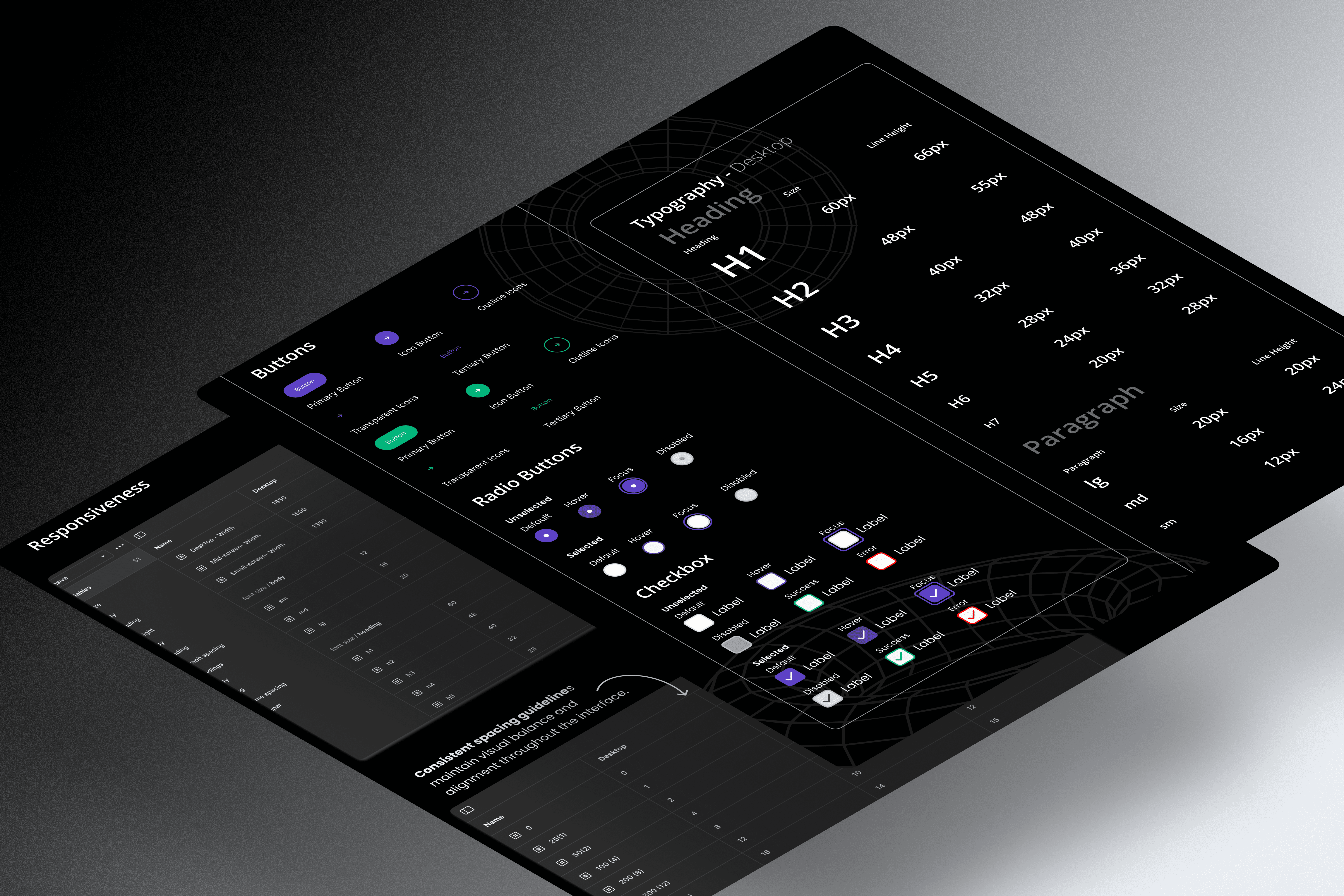
By building a reusable component library and standardizing design tokens, the system significantly reduced repetition and accelerated both design and development cycles. I focused on creating clarity through well-defined visual patterns, scalable layout systems, and intuitive interactions ensuring a predictable and user-friendly experience. Shared documentation and specs helped bridge communication gaps between designers and developers, streamlining collaboration.
Developed a unified design language that could be applied seamlessly across Medprime’s web and mobile products.
By building a reusable component library and standardizing design tokens, the system significantly reduced repetition and accelerated both design and development cycles. I focused on creating clarity through well-defined visual patterns, scalable layout systems, and intuitive interactions ensuring a predictable and user-friendly experience. Shared documentation and specs helped bridge communication gaps between designers and developers, streamlining collaboration.
Developed a unified design language that could be applied seamlessly across Medprime’s web and mobile products.
By building a reusable component library and standardizing design tokens, the system significantly reduced repetition and accelerated both design and development cycles. I focused on creating clarity through well-defined visual patterns, scalable layout systems, and intuitive interactions ensuring a predictable and user-friendly experience. Shared documentation and specs helped bridge communication gaps between designers and developers, streamlining collaboration.
Developed a unified design language that could be applied seamlessly across Medprime’s web and mobile products.
By building a reusable component library and standardizing design tokens, the system significantly reduced repetition and accelerated both design and development cycles. I focused on creating clarity through well-defined visual patterns, scalable layout systems, and intuitive interactions ensuring a predictable and user-friendly experience. Shared documentation and specs helped bridge communication gaps between designers and developers, streamlining collaboration.
SOLUTION
Developed a unified design language that could be applied seamlessly across Medprime’s web and mobile products.
By building a reusable component library and standardizing design tokens, the system significantly reduced repetition and accelerated both design and development cycles. I focused on creating clarity through well-defined visual patterns, scalable layout systems, and intuitive interactions ensuring a predictable and user-friendly experience. Shared documentation and specs helped bridge communication gaps between designers and developers, streamlining collaboration.
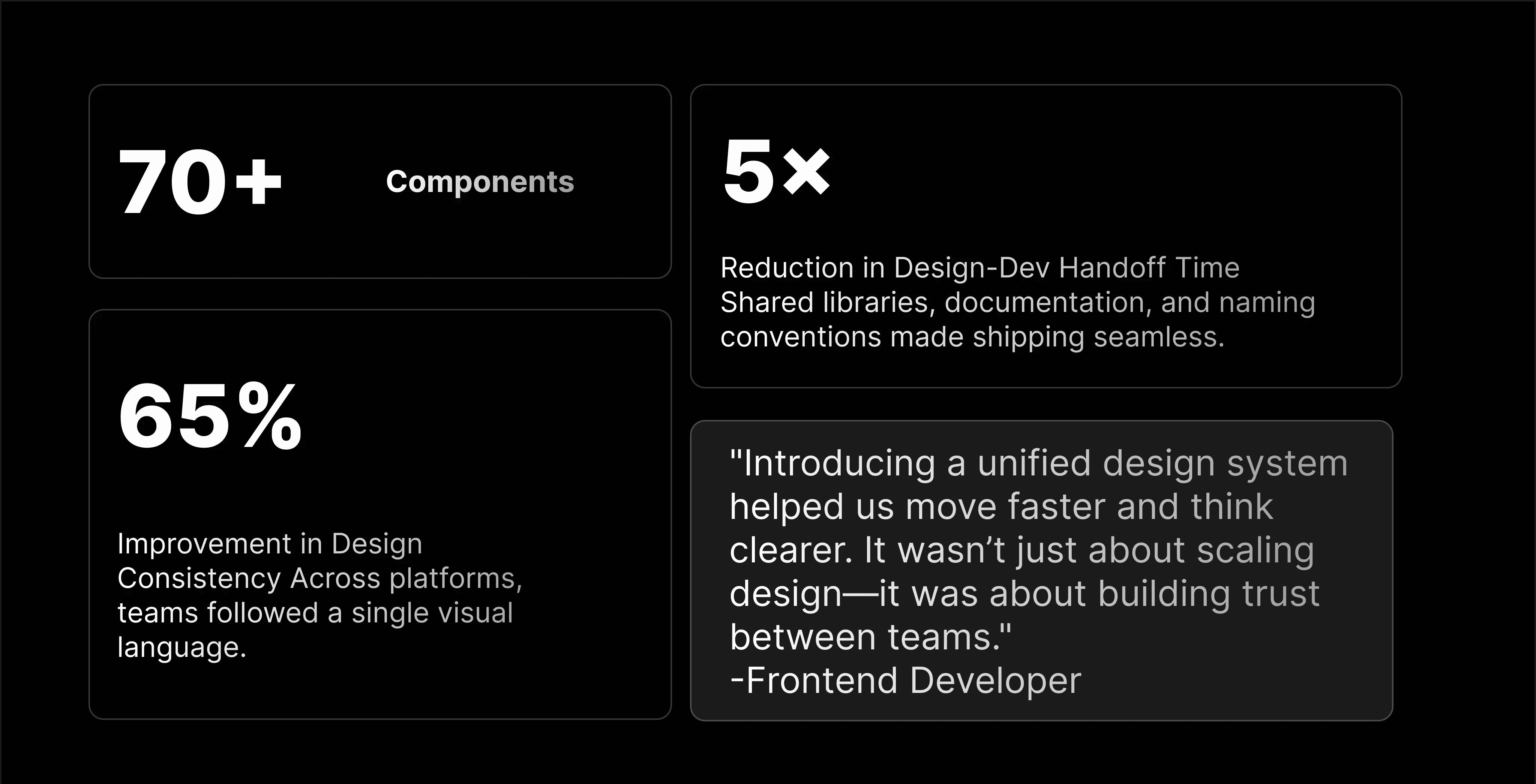
WHAT HAVE WE ACHIEVED
WHAT HAVE WE ACHIEVED
Developed a unified design language that could be applied seamlessly across Medprime’s web and mobile products.
By building a reusable component library and standardizing design tokens, the system significantly reduced repetition and accelerated both design and development cycles. I focused on creating clarity through well-defined visual patterns, scalable layout systems, and intuitive interactions ensuring a predictable and user-friendly experience. Shared documentation and specs helped bridge communication gaps between designers and developers, streamlining collaboration.
APPROACH
Developed a unified design language that could be applied seamlessly across Medprime’s web and mobile products.
By building a reusable component library and standardizing design tokens, the system significantly reduced repetition and accelerated both design and development cycles. I focused on creating clarity through well-defined visual patterns, scalable layout systems, and intuitive interactions ensuring a predictable and user-friendly experience. Shared documentation and specs helped bridge communication gaps between designers and developers, streamlining collaboration.
To solve these challenges, I took a systematic and collaborative approach that balanced visual consistency with functional scalability:
To solve these challenges, I took a systematic and collaborative approach that balanced visual consistency with functional scalability:
To solve these challenges, I took a systematic and collaborative approach that balanced visual consistency with functional scalability:
APPROACH
Developed a unified design language that could be applied seamlessly across Medprime’s web and mobile products.
By building a reusable component library and standardizing design tokens, the system significantly reduced repetition and accelerated both design and development cycles. I focused on creating clarity through well-defined visual patterns, scalable layout systems, and intuitive interactions ensuring a predictable and user-friendly experience. Shared documentation and specs helped bridge communication gaps between designers and developers, streamlining collaboration.
Audit & Research
Reviewed existing Medprime web and mobile products to identify design inconsistencies, benchmarked industry-standard systems (Material, Carbon, Fluent), and gathered feedback from developers and PMs to uncover recurring pain points.
Audit & Research
Reviewed existing Medprime web and mobile products to identify design inconsistencies, benchmarked industry-standard systems (Material, Carbon, Fluent), and gathered feedback from developers and PMs to uncover recurring pain points.
Component Library Development:
Designed and documented a library of reusable UI components with defined states, interactions, and usage guidelines. Accessibility standards were embedded from the start and compliant within sensitive medical workflows.
Component Library Development:
Designed and documented a library of reusable UI components with defined states, interactions, and usage guidelines. Accessibility standards were embedded from the start and compliant within sensitive medical workflows.
Cross-functional Collaboration
Worked closely with the development team to build components in code (e.g., using React, Storybook, or Figma tokens depending on your stack).Facilitated regular handoff sessions to align on spacing logic, interactivity, and implementation details.
Documentation & Governance
Created a living documentation where designers and developers could access guidelines, use cases, and code snippets. Establish a process for ongoing contributions and versioning to keep the system evolving in line with product needs.
Component Library Development:
Designed and documented a library of reusable UI components with defined states, interactions, and usage guidelines. Accessibility standards were embedded from the start and compliant within sensitive medical workflows.
Cross-functional Collaboration
Worked closely with the development team to build components in code (e.g., using React, Storybook, or Figma tokens depending on your stack).Facilitated regular handoff sessions to align on spacing logic, interactivity, and implementation details.
Documentation & Governance
Created a living documentation where designers and developers could access guidelines, use cases, and code snippets. Establish a process for ongoing contributions and versioning to keep the system evolving in line with product needs.
Cross-functional Collaboration
Worked closely with the development team to build components in code (e.g., using React, Storybook, or Figma tokens depending on your stack).Facilitated regular handoff sessions to align on spacing logic, interactivity, and implementation details.
Documentation & Governance
Created a living documentation where designers and developers could access guidelines, use cases, and code snippets. Establish a process for ongoing contributions and versioning to keep the system evolving in line with product needs.
LEARNINGS
Developed a unified design language that could be applied seamlessly across Medprime’s web and mobile products.
By building a reusable component library and standardizing design tokens, the system significantly reduced repetition and accelerated both design and development cycles. I focused on creating clarity through well-defined visual patterns, scalable layout systems, and intuitive interactions ensuring a predictable and user-friendly experience. Shared documentation and specs helped bridge communication gaps between designers and developers, streamlining collaboration.
Start with patterns, not pixels
Designing for scalability pushed me to think in terms of systems and patterns rather than isolated screens. It shifted my mindset from "how does this look" to "how does this behave, and where else can it be reused?"
Cross-functional collaboration is key
The success of the system wasn’t just in designing beautiful components, but in how well they could be translated into code. Regular syncs with developers helped align technical constraints with design intent and improved handoffs.
A design system is never really “done”
Creating the initial version was just the beginning. I learned that a good design system needs to evolve alongside the product. It’s a living, breathing ecosystem that requires updates, governance, and team contributions.
Start with patterns, not pixels
Designing for scalability pushed me to think in terms of systems and patterns rather than isolated screens. It shifted my mindset from "how does this look" to "how does this behave, and where else can it be reused?"
Start with patterns, not pixels
Designing for scalability pushed me to think in terms of systems and patterns rather than isolated screens. It shifted my mindset from "how does this look" to "how does this behave, and where else can it be reused?"
Cross-functional collaboration is key
The success of the system wasn’t just in designing beautiful components, but in how well they could be translated into code. Regular syncs with developers helped align technical constraints with design intent and improved handoffs.
Cross-functional collaboration is key
The success of the system wasn’t just in designing beautiful components, but in how well they could be translated into code. Regular syncs with developers helped align technical constraints with design intent and improved handoffs.
A design system is never really “done”
Creating the initial version was just the beginning. I learned that a good design system needs to evolve alongside the product. It’s a living, breathing ecosystem that requires updates, governance, and team contributions.
A design system is never really “done”
Creating the initial version was just the beginning. I learned that a good design system needs to evolve alongside the product. It’s a living, breathing ecosystem that requires updates, governance, and team contributions.
LEARNINGS
Developed a unified design language that could be applied seamlessly across Medprime’s web and mobile products.
By building a reusable component library and standardizing design tokens, the system significantly reduced repetition and accelerated both design and development cycles. I focused on creating clarity through well-defined visual patterns, scalable layout systems, and intuitive interactions ensuring a predictable and user-friendly experience. Shared documentation and specs helped bridge communication gaps between designers and developers, streamlining collaboration.