Nov 9, 2023
6 min read
Rethinking the Commute: A Hands-On Exploration of Mumbai’s Local Trains
Rethinking the Commute: A Hands-On Exploration of Mumbai’s Local Trains
Explored the intersection of people, design, and public transportation through a hands-on project that uncovered the unseen layers of everyday commuting.
As I look back at my time in college, this project stands out for how real it felt.Unlike most classroom assignments that stayed on screens or in notebooks, this one pushed us to engage with the outside world. It was less about polished UX outputs and more about understanding people, places, and problems firsthand.
The project focused on Mumbai’s local train system—a network that millions depend on every day, yet one that presents constant challenges in comfort, accessibility, and inclusivity. Through the lens of design thinking, our goal was to explore how these everyday pain points could be addressed with simple, human-centered solutions.
As I look back at my time in college, this project stands out for how real it felt.Unlike most classroom assignments that stayed on screens or in notebooks, this one pushed us to engage with the outside world. It was less about polished UX outputs and more about understanding people, places, and problems firsthand.
The project focused on Mumbai’s local train system—a network that millions depend on every day, yet one that presents constant challenges in comfort, accessibility, and inclusivity. Through the lens of design thinking, our goal was to explore how these everyday pain points could be addressed with simple, human-centered solutions.
Understanding the Challenges
We followed the Design Thinking process (EDIPT: Empathize, Define, Ideate, Prototype, Test) to guide our approach, but what made the project truly insightful was the depth of understanding we gained during the first phase empathize.
To do this, we spoke to a wide range of commuters, each with their own relationship to the local train system. A college student juggling part-time work described the daily struggle of boarding overcrowded compartments. A senior citizen shared how the lack of seating and support at platforms made travel physically exhausting. A first-time tourist admitted feeling completely lost and overwhelmed by the pace and unspoken rules of the commute. A new mother talked about the discomfort and lack of privacy while travelling with her infant. And a business professional told us how hard it was to stay productive or even comfortable during peak-hour travel.
These conversations reminded us that while millions rely on the same train network, their individual experiences vary widely—and that gap between design and reality was something worth exploring.
The challenges we heard about most often were:
Overcrowding during peak hours with barely any standing room
Poor ventilation, especially uncomfortable in the summer
Lack of inclusive features, like private spaces for new mothers or quiet zones for professionals
Unreliable real-time updates, leading to confusion and stress
Limited seating and poor conditions on platforms, particularly hard on the elderly
These weren’t just inconveniences—they directly impacted people’s comfort, mental space, and dignity. As designers, this was a moment of shift—from seeing the train as a system to seeing it as a shared human experience with many unmet needs.
We followed the Design Thinking process (EDIPT: Empathize, Define, Ideate, Prototype, Test) to guide our approach, but what made the project truly insightful was the depth of understanding we gained during the first phase empathize.
To do this, we spoke to a wide range of commuters, each with their own relationship to the local train system. A college student juggling part-time work described the daily struggle of boarding overcrowded compartments. A senior citizen shared how the lack of seating and support at platforms made travel physically exhausting. A first-time tourist admitted feeling completely lost and overwhelmed by the pace and unspoken rules of the commute. A new mother talked about the discomfort and lack of privacy while travelling with her infant. And a business professional told us how hard it was to stay productive or even comfortable during peak-hour travel.
These conversations reminded us that while millions rely on the same train network, their individual experiences vary widely—and that gap between design and reality was something worth exploring.
The challenges we heard about most often were:
Overcrowding during peak hours with barely any standing room
Poor ventilation, especially uncomfortable in the summer
Lack of inclusive features, like private spaces for new mothers or quiet zones for professionals
Unreliable real-time updates, leading to confusion and stress
Limited seating and poor conditions on platforms, particularly hard on the elderly
These weren’t just inconveniences—they directly impacted people’s comfort, mental space, and dignity. As designers, this was a moment of shift—from seeing the train as a system to seeing it as a shared human experience with many unmet needs.
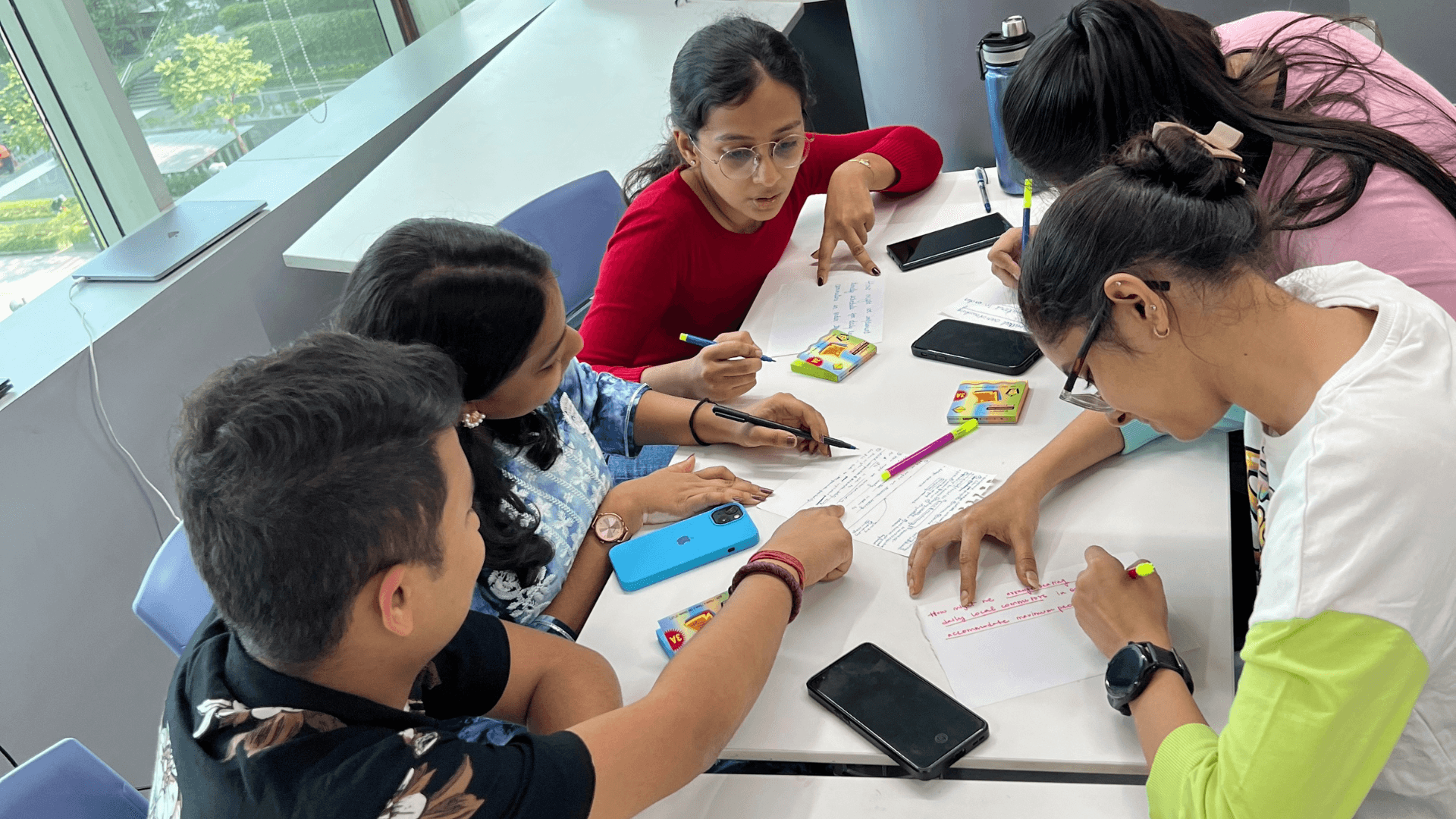
Ideation: Designing for Everyday Needs
Once we had a clear understanding of the commuter experience, we moved into the Ideate phase. This was where we began exploring how design could respond to the different needs we had uncovered—without trying to oversimplify a complex system.
We focused on three key opportunity areas:
Space optimization for peak-hour commuters
Comfort and privacy for new mothers and vulnerable passengers
Upgraded travel experience for professionals and frequent travelers
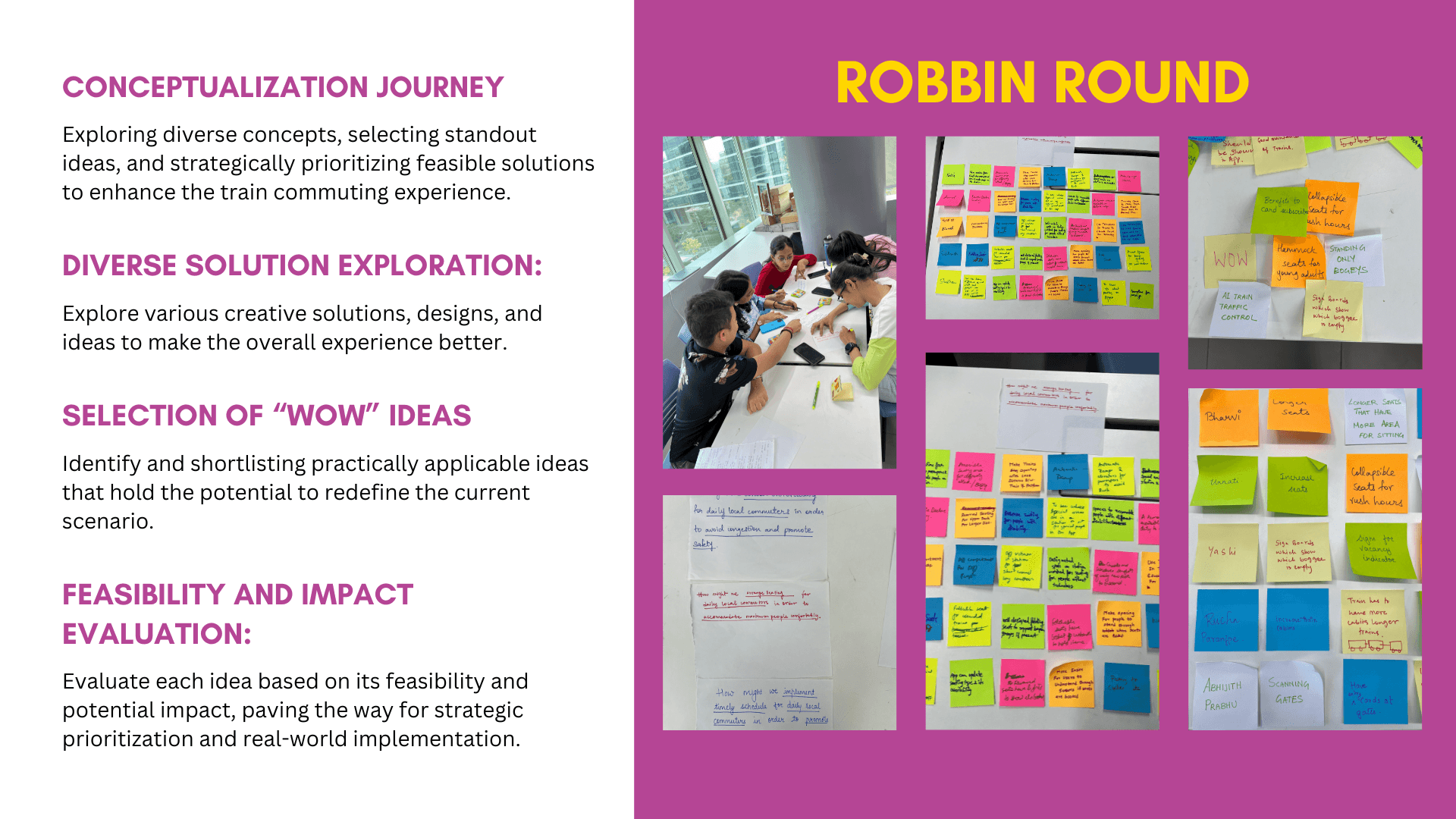
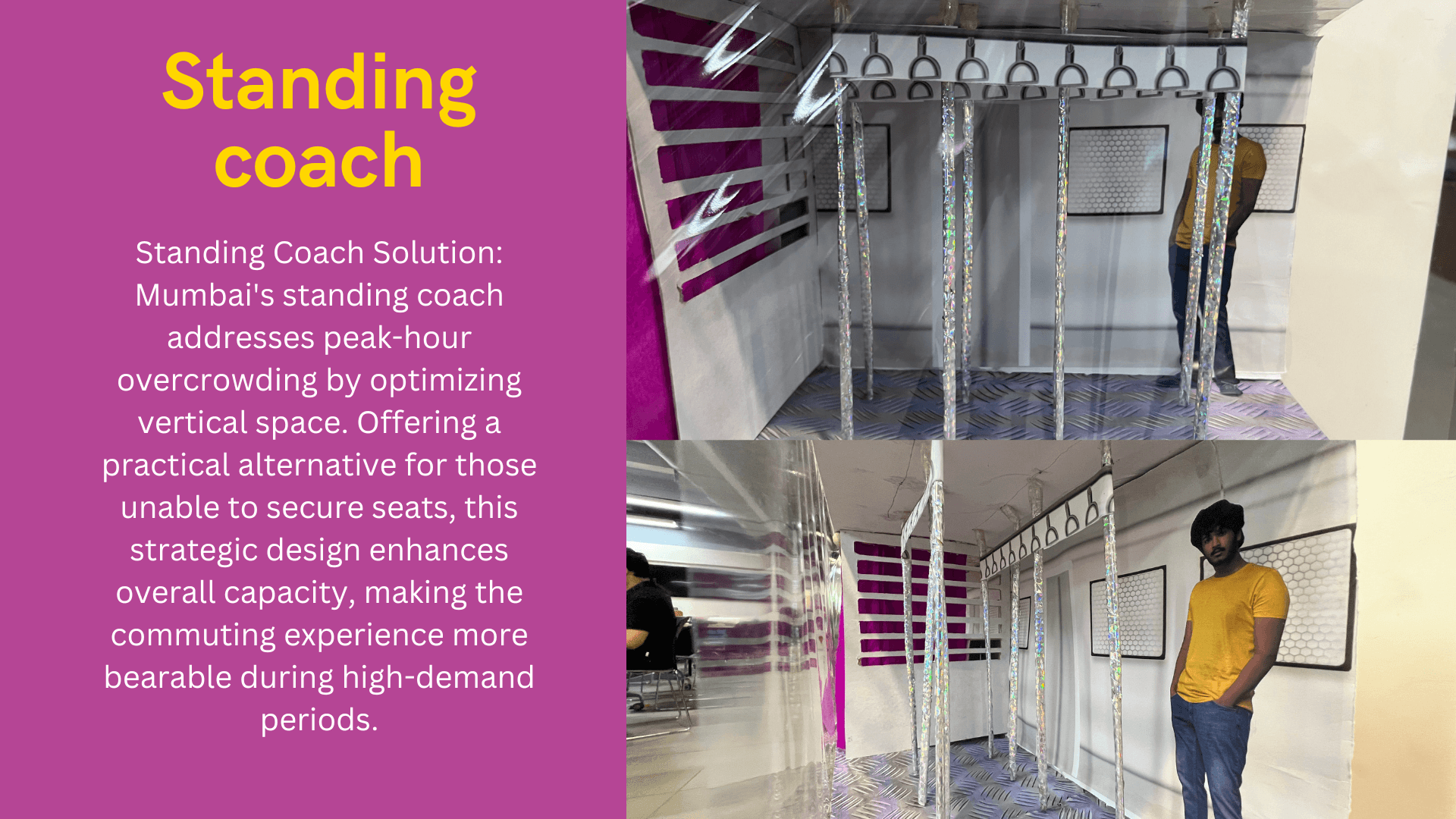
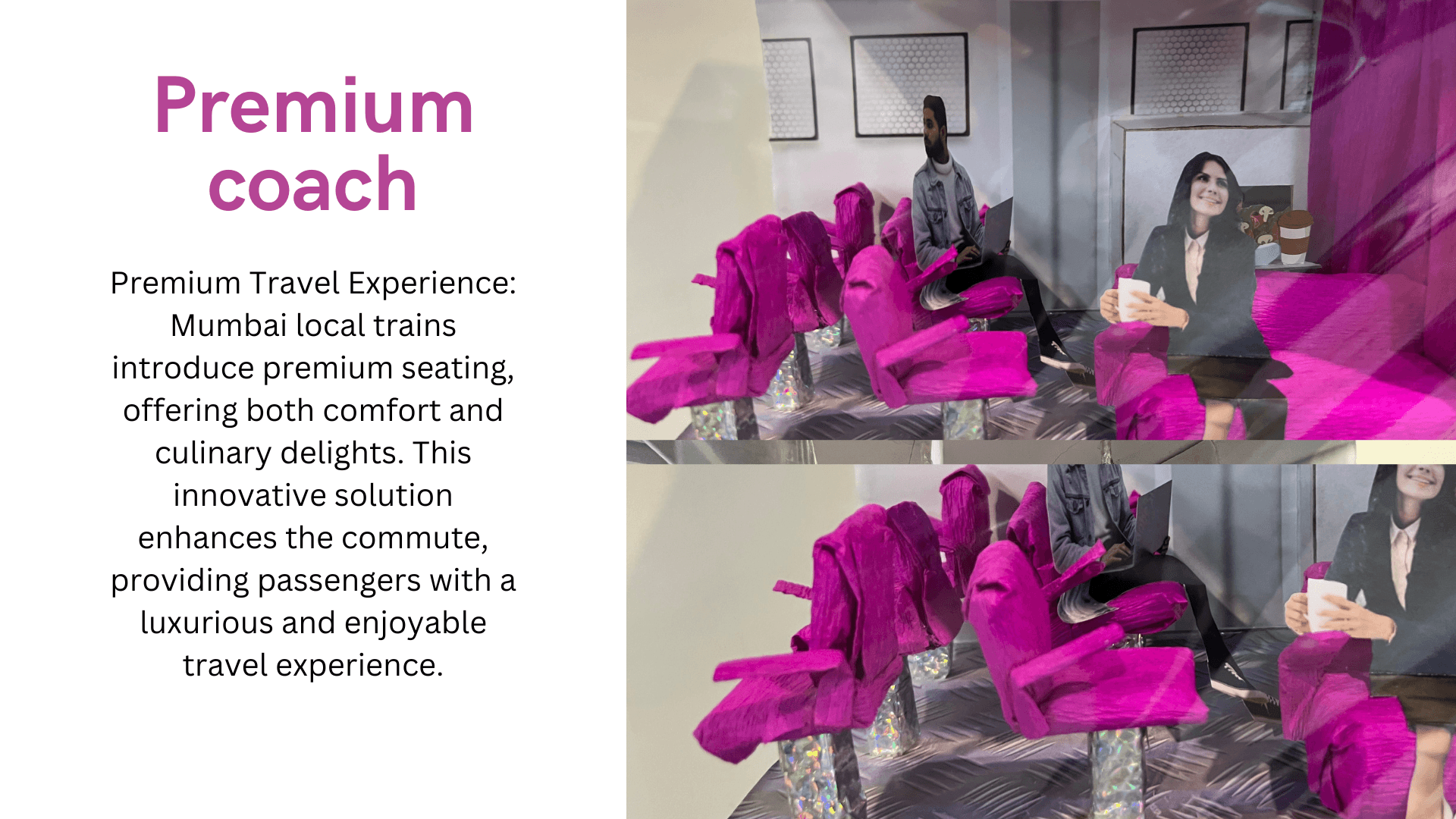
From here, we began sketching out ideas and discussing what might be feasible within an existing public system. We explored possibilities like dedicated standing coaches to free up space, modular seating arrangements that could adapt to rush-hour needs, and premium coaches offering quieter, more comfortable travel options. One of the most meaningful ideas to emerge was a “Mom & Baby Nook” — a small, thoughtfully placed space within a coach for mothers to breastfeed or care for their infants with more privacy and comfort.
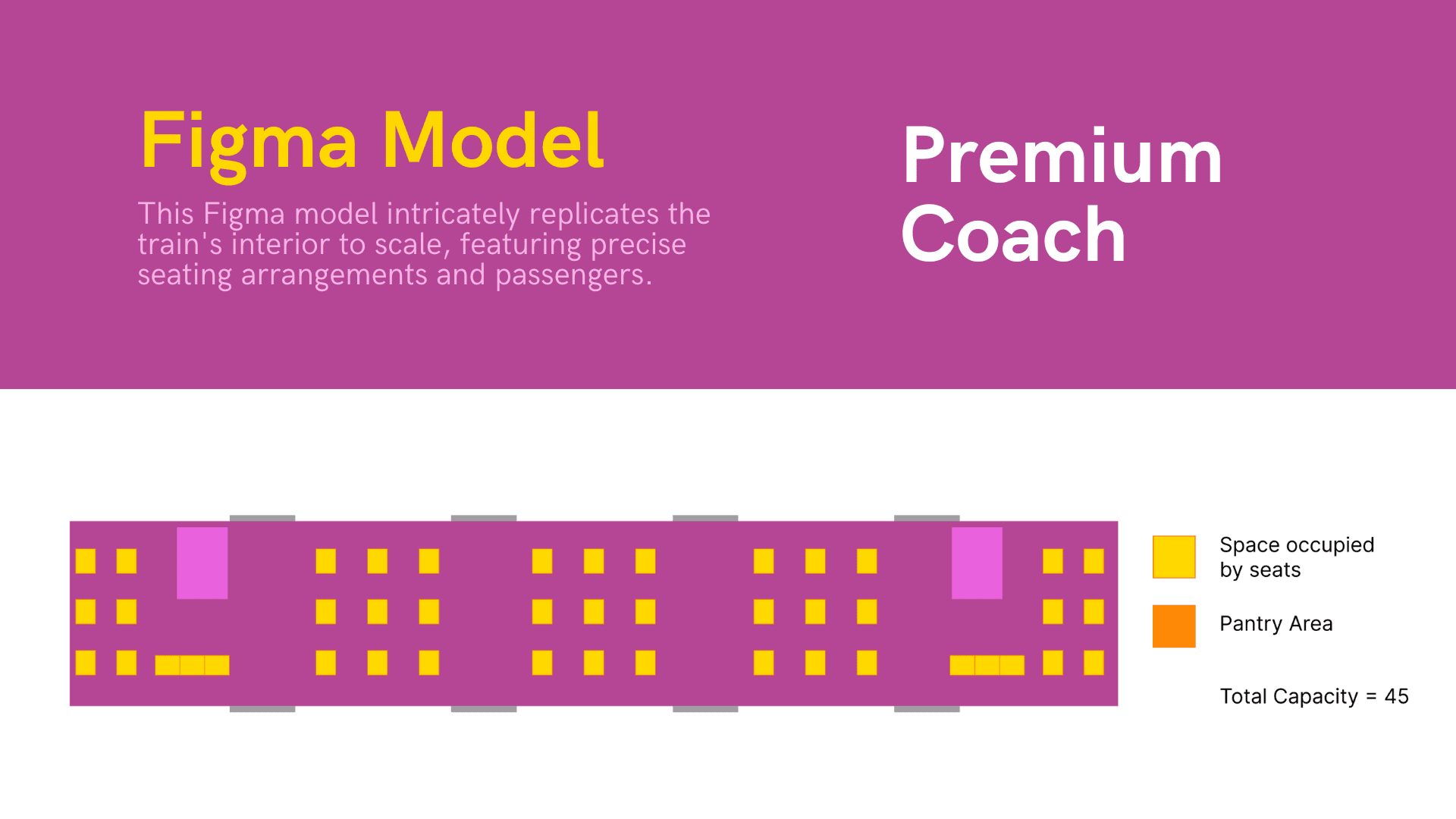
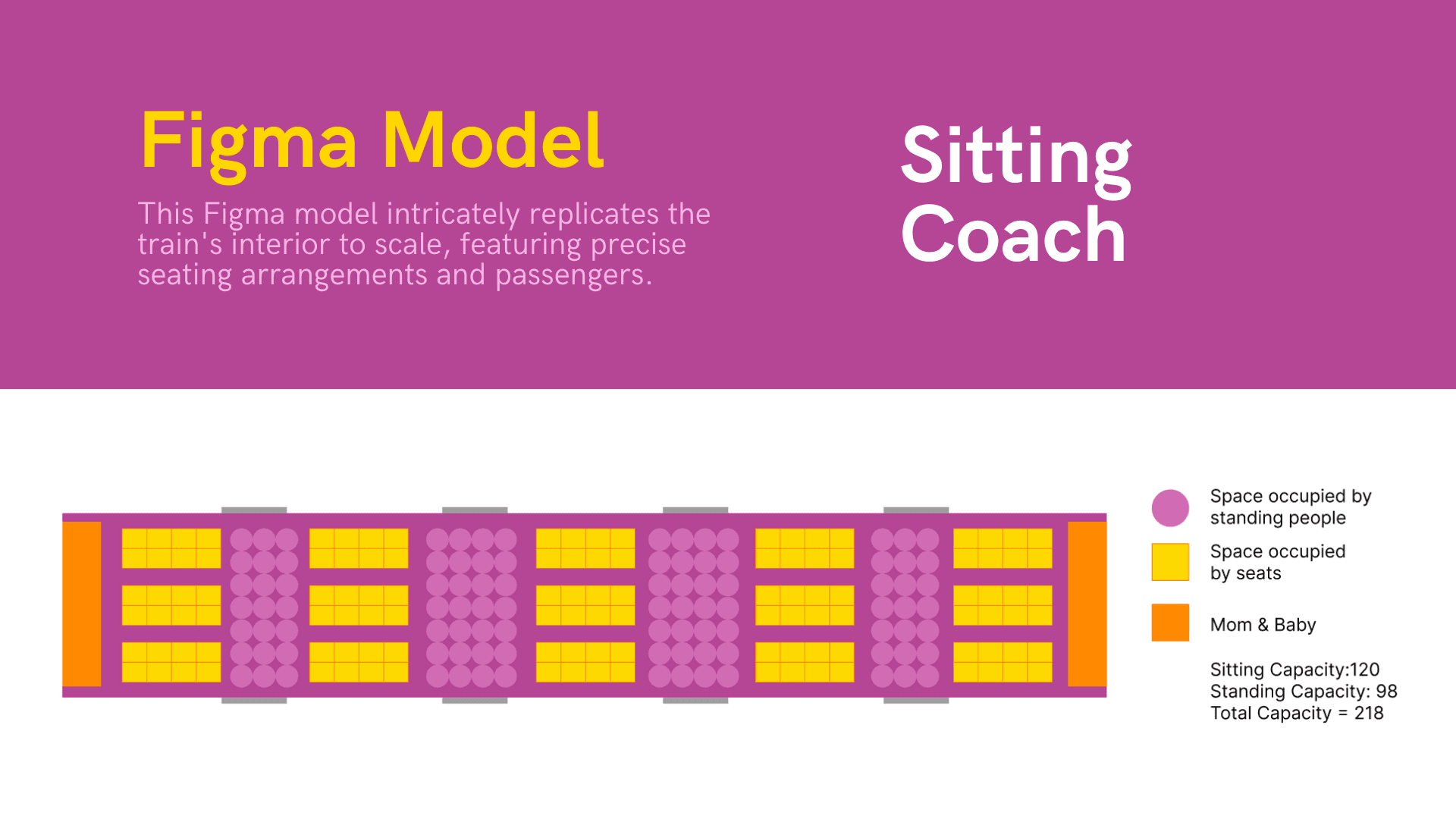
We narrowed down concepts based on feasibility and impact, and built digital prototypes using Figma to simulate real-world train interiors. Each design focused on user-centered changes that didn’t require an overhaul of the system, but rather improvements that were practical, modular, and meaningful.
Once we had a clear understanding of the commuter experience, we moved into the Ideate phase. This was where we began exploring how design could respond to the different needs we had uncovered—without trying to oversimplify a complex system.
We focused on three key opportunity areas:
Space optimization for peak-hour commuters
Comfort and privacy for new mothers and vulnerable passengers
Upgraded travel experience for professionals and frequent travelers
From here, we began sketching out ideas and discussing what might be feasible within an existing public system. We explored possibilities like dedicated standing coaches to free up space, modular seating arrangements that could adapt to rush-hour needs, and premium coaches offering quieter, more comfortable travel options. One of the most meaningful ideas to emerge was a “Mom & Baby Nook” — a small, thoughtfully placed space within a coach for mothers to breastfeed or care for their infants with more privacy and comfort.
We narrowed down concepts based on feasibility and impact, and built digital prototypes using Figma to simulate real-world train interiors. Each design focused on user-centered changes that didn’t require an overhaul of the system, but rather improvements that were practical, modular, and meaningful.
Reflections
To test our ideas, we shared prototypes and visuals with people from the same user groups we had interviewed earlier. The response was encouraging — commuters appreciated that the solutions addressed everyday frustrations without making the system more complex.
The Standing Coach idea was seen as a practical way to reduce peak-hour congestion. The Mom & Baby Nook was received positively for its empathy-driven design, though it raised valid concerns about long-term hygiene and upkeep. The Premium Coach appealed to professionals looking for a quieter ride, though some questioned whether it truly solved core accessibility issues.
More than anything, the feedback highlighted that small, thoughtful changes can make a big difference, especially when they’re grounded in real user needs.
This project gave us a hands-on understanding of what it means to design within constraints and for a system that serves millions. It taught us to balance idealism with practicality, and to see UX as something that goes far beyond screens. Whether it was a change in seating layout or a new way to think about space, the goal was always the same: to make the daily journey just a little better, one ride at a time.
To test our ideas, we shared prototypes and visuals with people from the same user groups we had interviewed earlier. The response was encouraging — commuters appreciated that the solutions addressed everyday frustrations without making the system more complex.
The Standing Coach idea was seen as a practical way to reduce peak-hour congestion. The Mom & Baby Nook was received positively for its empathy-driven design, though it raised valid concerns about long-term hygiene and upkeep. The Premium Coach appealed to professionals looking for a quieter ride, though some questioned whether it truly solved core accessibility issues.
More than anything, the feedback highlighted that small, thoughtful changes can make a big difference, especially when they’re grounded in real user needs.
This project gave us a hands-on understanding of what it means to design within constraints and for a system that serves millions. It taught us to balance idealism with practicality, and to see UX as something that goes far beyond screens. Whether it was a change in seating layout or a new way to think about space, the goal was always the same: to make the daily journey just a little better, one ride at a time.